
December Recap: Be Optimistic and Be Prepared by Jack Moller
Submitted by Moller Financial Services on January 16th, 2017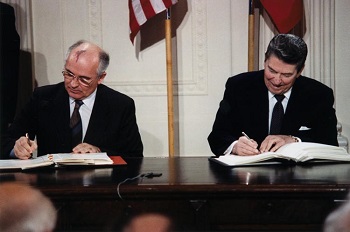
In the 1980s, Ronald Reagan famously borrowed from a Russian proverb in negotiating disarmament deals with Soviet President Mikhail Gorbachev saying that we would “Trust but verify”. The idea was to come into the negotiations with an attitude of trust while ensuring that there were ways to verify that the trust was validated. Linguists have argued that by using the conjunction “but”, Reagan was essentially making the phrase meaningless as with true trust one does not have to verify.
When looking back at last year’s happenings and market performance, somehow this phrase – “be optimistic and be prepared” – came to me and had me thinking back to the Reagan quote. I believe we should be optimistic and expect good returns because ultimately – over some unknowable (and most) time frames – the market will deliver good returns. And, we should also be prepared for the inevitable bear markets that intervene. The important thing is to never lose sight of the fact that the long run advance is inevitable while the short-term declines are always temporary!
Optimism Just Makes Sense
Last year some major, unanticipated events hit the markets that left many fearful of “what’s next”. The biggies:
- “Worst market start to a year in history”. During the first six weeks of 2016, the market sold off fairly sharply. By some measures, the decline was the worst ever recorded – though, of course, it was not enough of a decline even to be labeled an official bear market as that would require a decline of 20% or more. At the time many feared that this fairly old (almost seven years at the time) bull market was heading for its demise and that it would be a painful end. Oops, the market bottomed on February 11 and, despite increased volatility rallied through year end.
- Brexit passed. Seemingly everyone (except of course the majority who voted for Brexit) knew that it would be insane and trigger Armageddon if the Brits voted to leave the European Union. In a surprise to pollsters and the markets, the “leave” vote won. With this surprise, the markets were jolted selling off sharply for a few days. Then, as we know, the markets reversed and rose sharply. Armageddon was postponed again, I guess.
- Trump election victory. Donald Trump was such an outsider and not a traditional politician that the market seemed to fear the uncertainty his election might bring. But, alas, it seemed there was nothing to worry about as Hillary Clinton seemed in good shape to win (not just the popular vote but also the electoral college). Again, surprise! The unexpected election of Trump triggered massive, panicked selling overnight. This time the selling lasted for a few hours. The U.S. markets reversed quickly and rallied to new highs.
These are just a few examples of how the optimists were rewarded in the shortest of runs, just one year. Looking back a bit, I found some numbers that are truly astounding and, in my view, validate the need to, not only focus on the long-term, but also to be a long-run market optimist.
- Twenty Five Years Ago. Every month we take a look at various indexes returns going back 25 years. Since January 1992, we’ve experienced two lengthy bull markets sandwiching the worst bear market since the 1930s. Yet, with all the turmoil, the S&P has still gone up 5.5 times! This period included multiple wars in the Middle East, presidential impeachment, 9/11, the internet bubble and bust, the “lost decade”, the great financial crisis, and ongoing political/culture wars. We can add the events noted above of the past year to the list as well.
- Very Long Time Ago. I was born October 2, 1957. At that way distant date, the S&P 500 closed at a price of $43.10, adjusted for dividends. As I write this, the S&P 500 is trading at $2,267.16. So in my 59-plus years on this planet, the S&P 500 has gone up more than 52 times. If my parents had the wherewithal to invest ~$19,000 in the S&P 500 at my birth, I’d be a millionaire right now! This longer period includes all the events noted above plus all the turbulence of the 60s and 70s, including periods of double-digit inflation and interest rates.
My point, obviously, is that it pays incredibly handsomely to be a patient, optimistic long-term investor.
Being Prepared both Emotionally and Strategically
Sounds compelling and easy, doesn’t it? Yes, it does pay off to patiently remain focused on the long-term. However, the periodic interruptions to this trend can be quite harrowing and make following the strategy quite challenging. We believe it is important to know that bear markets – i.e. fairly steep and sometimes quite painful and scary market sell-offs – are simply part of the normal market cycles. I love to quote the great Peter Lynch of Magellan mutual fund who when asked the key to being a successful stock investor responded, “not getting scared out of them”. In other words, have a sound long-term strategy and stick with it over the years.
Financial vs. Emotional Costs (Is there really a difference?)
When we experience a bear market, we see our portfolios temporarily decline. Depending on the character of the sell-off and our specific investment strategy, our actual portfolio declines will vary. The important thing is to remember that these declines are always temporary and that in order to be a successful long-term investor we must stay the course, particularly at those times when it seems hardest to do so. Sadly many people forget the temporariness of these declines and end up selling after the prices have declined significantly, turning these temporary declines into permanent losses. A few comments on “Being Prepared”:
- Another bear market will arrive sooner or later. Markets have always and will always experience these declines of 20% or more that interrupt the long-term appreciation of stock values. We just don’t know when they will occur. While they, on average, occur every five years or so the actual lengths of bull markets vary significantly. If our current bull can continue for another couple months, it will be starting its ninth year. That’s old but not unprecedented. The age of the bull market is no reason to get overly bearish but just to keep in mind that a down market will come and don’t forget that however severe it is, it will end and the long-term advance will ensue.
- Our emotions can be our worst enemies. As noted above, emotionally reacting can lead to locking in losses. Many panicked and sold out their portfolios at the lows set in 2009 and have yet to re-enter the market. This type of reaction can tragically decimate long-term financial plans.
- Rigorously following a sound strategy keeps our emotions at bay. A strategy (investment plan) and an advisor serve as a buffer between our emotions and our portfolios keeping us on course when we are most at risk.
- Risk management strategies are designed to lessen the depth of portfolio declines during these bear markets.
- Any strategy that “manages risk” is really geared to make the bad times not so bad which helps both financially and emotionally.
- However, as we know, there is no free lunch. This downside insurance does cost something. Whether we protect our portfolios while also minimizing the emotional cost/risk by broadly diversifying, tactically adjusting, or simply buying options, we are in essence paying a premium to help us avoid a catastrophic decline. In fact, in the example of the options purchase, the price is called the “premium”.
Having both optimism that is grounded in reality and a proper plan can help us become more confident about an unknown future.
